







FOOTPRINT


To walk on the bright side means working to reduce our impact on the climate, biodiversity and water all at once, since these environmental issues are intrinsically linked - and our business depends on all three.
It means better understanding, mapping out and measuring our impacts.
It means taking action to reduce our impact, starting where we have the most room for improvement.
It means seeking and contributing to the development of innovative solutions to do better.
To walk on the bright side means working to reduce our impact on the climate, biodiversity and water all at once, since these environmental issues are intrinsically linked - and our business depends on all three.
It means better understanding, mapping out and measuring our impacts.
It means taking action to reduce our impact, starting where we have the most room for improvement.
It means seeking and contributing to the development of innovative solutions to do better.
#Justfacts
ba&sh's carbon
footprint in 2025
Since 2019, ba&sh has assessed its carbon footprint yearly, using the GHG Protocol methodology across all its direct and indirect activities.
In 2022, ba&sh's activities generated 63,328 tons of CO2e, equivalent to driving around the world 7,200 times or flying 31,500 times between Paris and New York.
Between 2021 and 2022, ba&sh reduced its carbon footprint by 15%, or 11,461 tonnes of CO₂.
This reduction has been made possible thanks to 3 key action levers: increasing the proportion of certified materials in the composition of our products, reducing our use of air transport by 10% and finally using renewable energies for part of our shops and our warehouse.
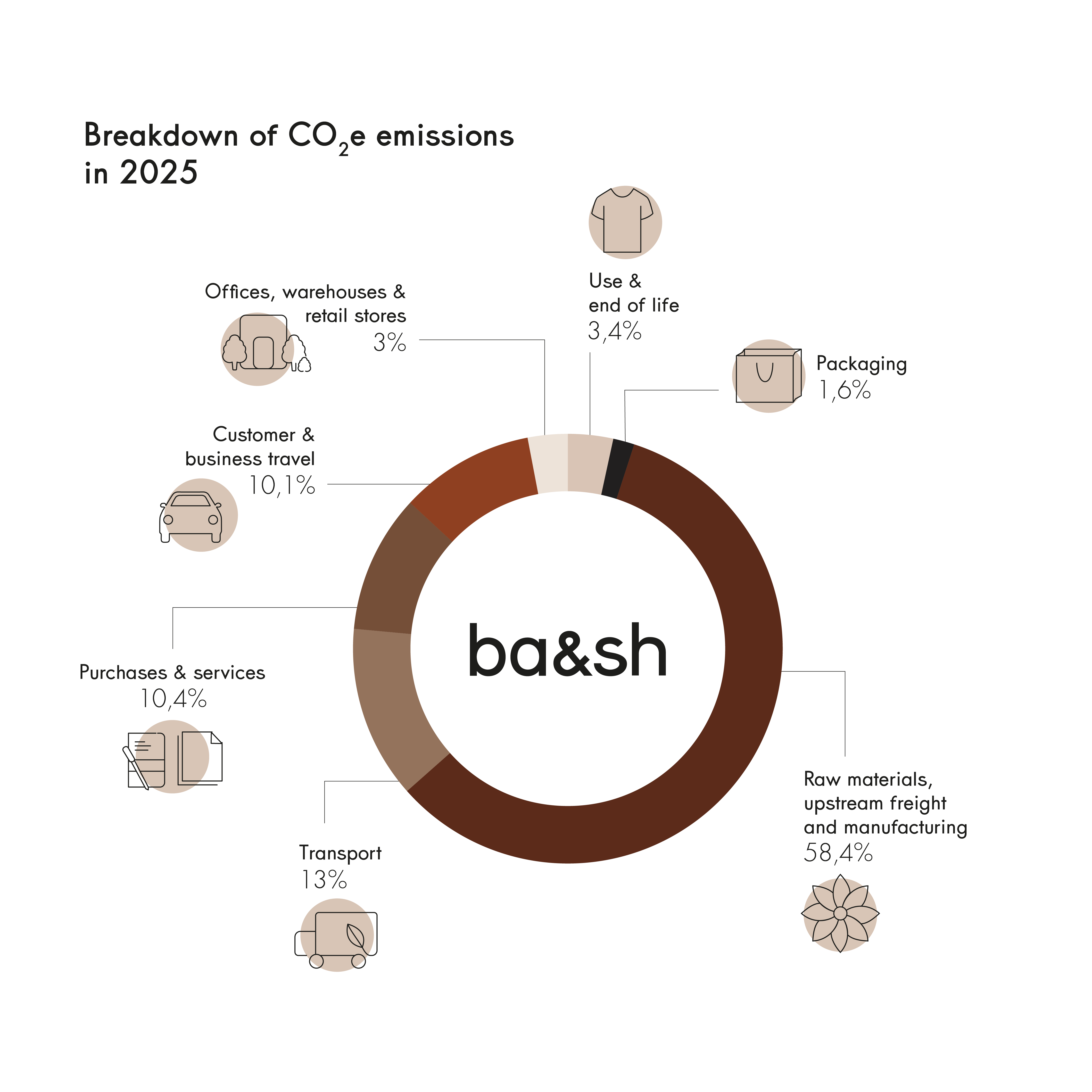
Breakdown of CO₂e
emissions by category
 CARBON FOOTPRINT REPORT 2025
 Adapting our infrastructures and practices
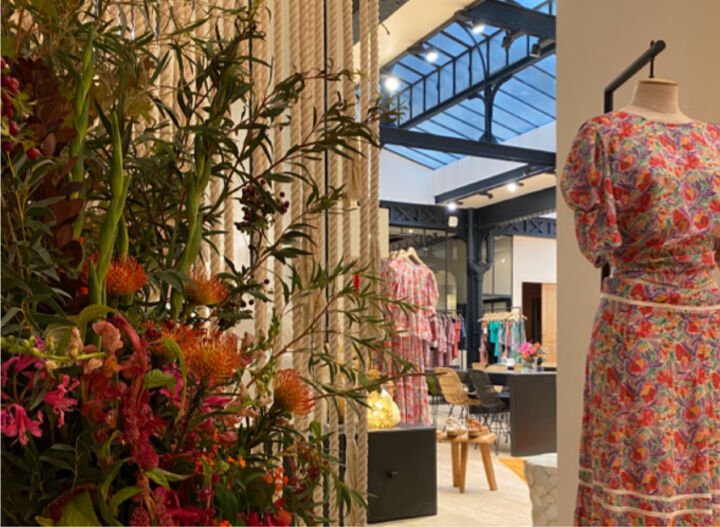

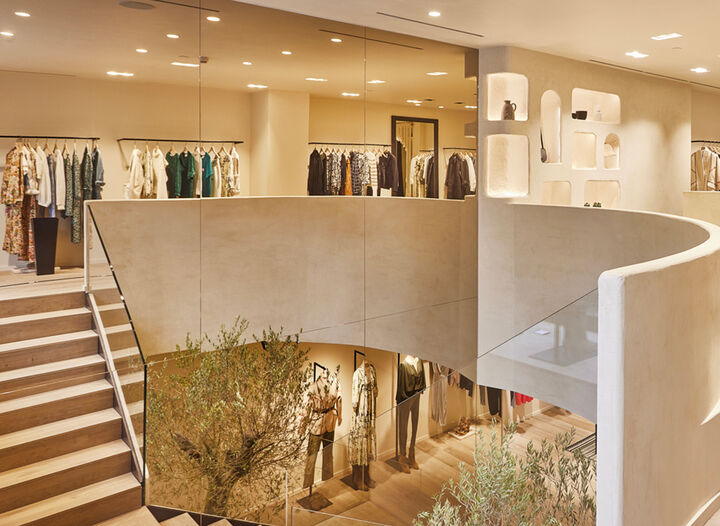

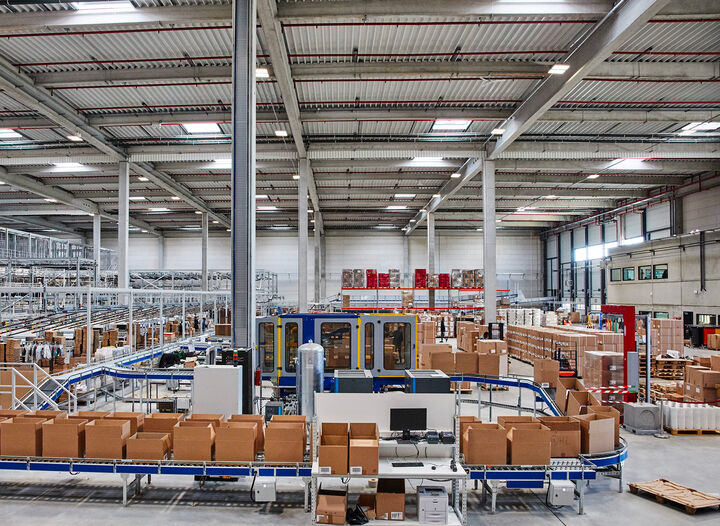
Adapting our infrastructures and our practices
Headquarters
Our offices around the world are powered by electricity with varying carbon-intensity depending on each country's energy mix. For example, France's energy mix is less carbon-intensive than that of China or the United States, as it relies more on nuclear power than on coal.
4.6 tons.
That's the amount of waste collected and recycled from our Paris headquarters by our partner Lemon Tri in 2023.
Lemon Tri is a certified B Corp from the social economy sector that collects and recycles waste in France.
Our Target:
100% of ba&sh offices powered by renewable energies by 2025.
Stores
Our points of sale account for 8.5% of our carbon footprint. Between 2022 and 2021, ba&sh has achieved a 36% reduction of associated emissions (i.e. around 2,600 tons of CO2e) by switching to renewable energy supply contracts.
In Europe, 93% of ba&sh stores are now powered either by renewable energies (over 87%) or nuclear power. As for our points of sale in Asia and the United States, where reliance on coal remains prevalent, we're actively exploring alternative solutions.
Our target:
100% of our points of sale powered by renewable energy by 2025.
*Countries with a low-carbon energy mix: Switzerland, Norway, France, Sweden. Countries with a high-carbon energy mix: China, Germany, Belgium, Denmark, Spain, Luxembourg, Netherlands, Portugal, UK, USA, Canada.
Warehouse
ba&sh's worldwide logistics hub is located in a warehouse north of Paris. The building has been awarded the "Excellent" level of High Environmental Quality (HQE) certification and has been powered entirely by renewable energies since 2023.
All waste generated at the warehouse is collected and recycled by Paprec and Lemon Tri.
2028 target:
0% virgin plastic in logistics packaging.
At ba&sh, we advocate a holistic approach that simultaneously addresses climate and biodiversity, which are themselves interdependent. The production of raw materials and the manufacturing and processing of ba&sh garments have a major impact on biodiversity. ba&sh strives to reduce associated impacts in the following areas

In 2021, ba&sh worked with a specialized consultancy to assess the company’s impact on biodiversity. A specific action plan was established to complement our climate strategy.
Our actions focus on the following themes:
Production of materials:
Transformation processes (washing, dyeing, tanning, etc.)


To walk on the bright side is to confront the crucial issue of water in the textile industry, which both consumes significant amounts of water and can contribute to polluting it.
It means doing our part to reduce water consumption and the pollution of water that can occur along our supply chain.
We are taking decisive action concerning our most water-intensive materials and transformation processes:

100% of our tanneries are LWG (Leather Working Group) certified in 2025 and 55% of them are located in Europe. This benchmark certification assesses the environmental and social performance of tanneries against criteria such as water, waste, energy and chemical management and air quality. ba&sh prioritizes tanning in Europe, which upholds the highest regulatory standards in terms of water and chemical product management.

100% of our tanneries are LWG (Leather Working Group) certified in 2025 and 55% of them are located in Europe. This benchmark certification assesses the environmental and social performance of tanneries against criteria such as water, waste, energy and chemical management and air quality. ba&sh prioritizes tanning in Europe, which upholds the highest regulatory standards in terms of water and chemical product management.

For our Winter 2023 collection, 53% of our denim were washed in an eco-responsible way, scoring low (less than 53) on the EIM (Environmental Impact Measurement). Each piece required less than 35L of water to be washed - down from 80L for a conventional wash. A low EIM score also implies less chemical use, and therefore less risk of water pollution.

100% of our denim laundries have undergone an environmental audit in line with ba&sh requirements. ba&sh uses the BEPI methodology, which is based on 11 evaluation criteria, including energy consumption, greenhouse gas emissions, water consumption and chemical use.
In 2024, we carried out a complete water footprint of our activities across our entire value chain.
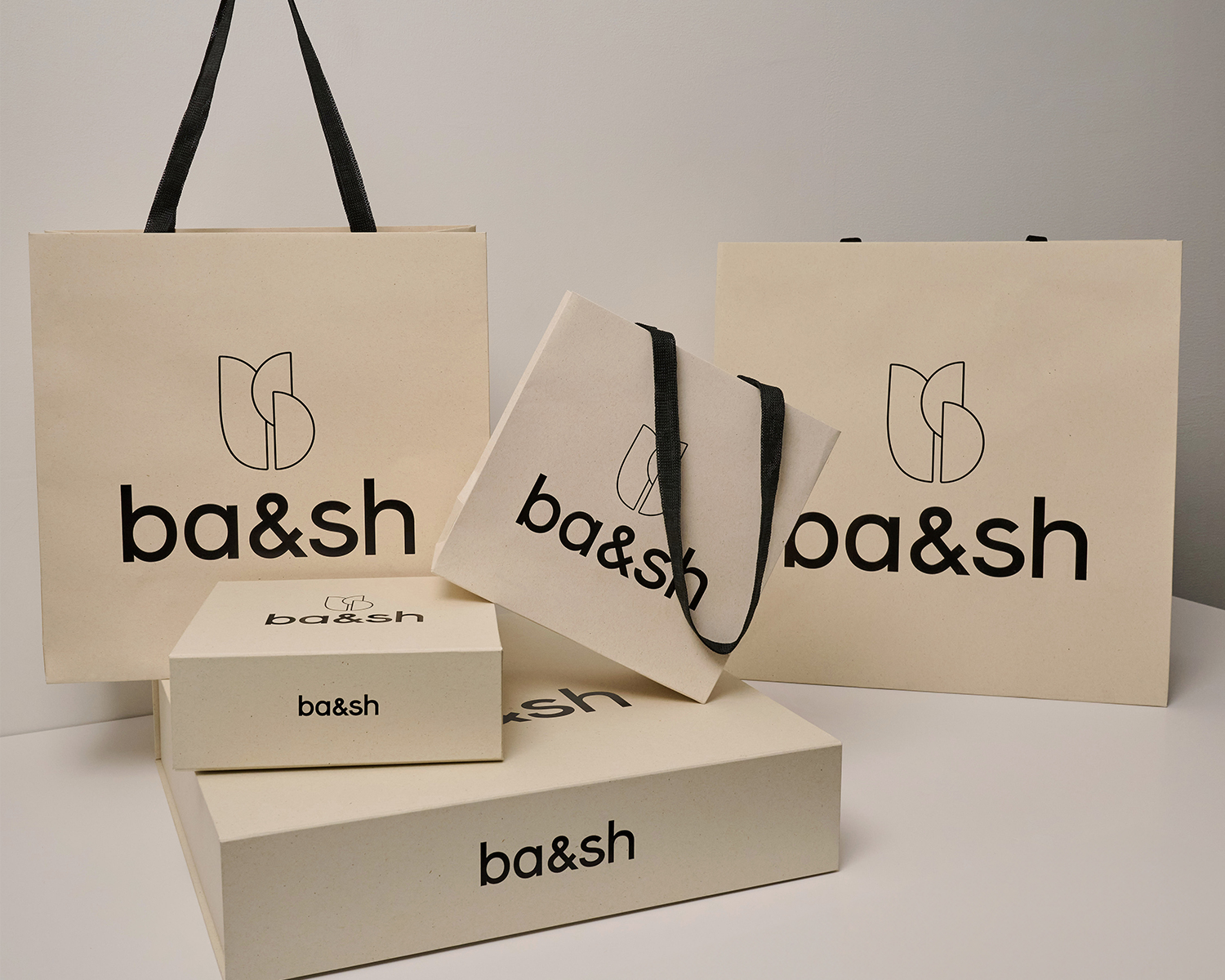
Our packaging
Packaging accounts for 1.6% of ba&sh's carbon footprint. Though not the most significant source of emissions, and because any progress is good progress, we are also seeking to improve on this front: ba&sh has joined the Pack4good initiative led by the environmental not-for-profit Canopy. We are phasing out virgin plastic from our packaging as well as superfluous packaging, and for the latter we use recycled and certified materials sourced from sustainably managed forests.
E-commerce
Our paper packaging for customers is made from 85% recycled paper in 2025, up from 79% in 2024.
Our e-commerce packaging and our tissue paper are made from 100% recycled paper, using wood pulp from sustainably managed forests, and are 100% recyclable.
Stores
Our shopping bags are made from 80% recycled paper, and made from wood pulp from sustainably managed forests. Unfortunately, for reasons of strength, they cannot yet be made from 100% recycled paper.
As for our tissue paper, it is 100% recycled, made from wood pulp sourced from sustainably managed forests, and fully recyclable.
Warehouse
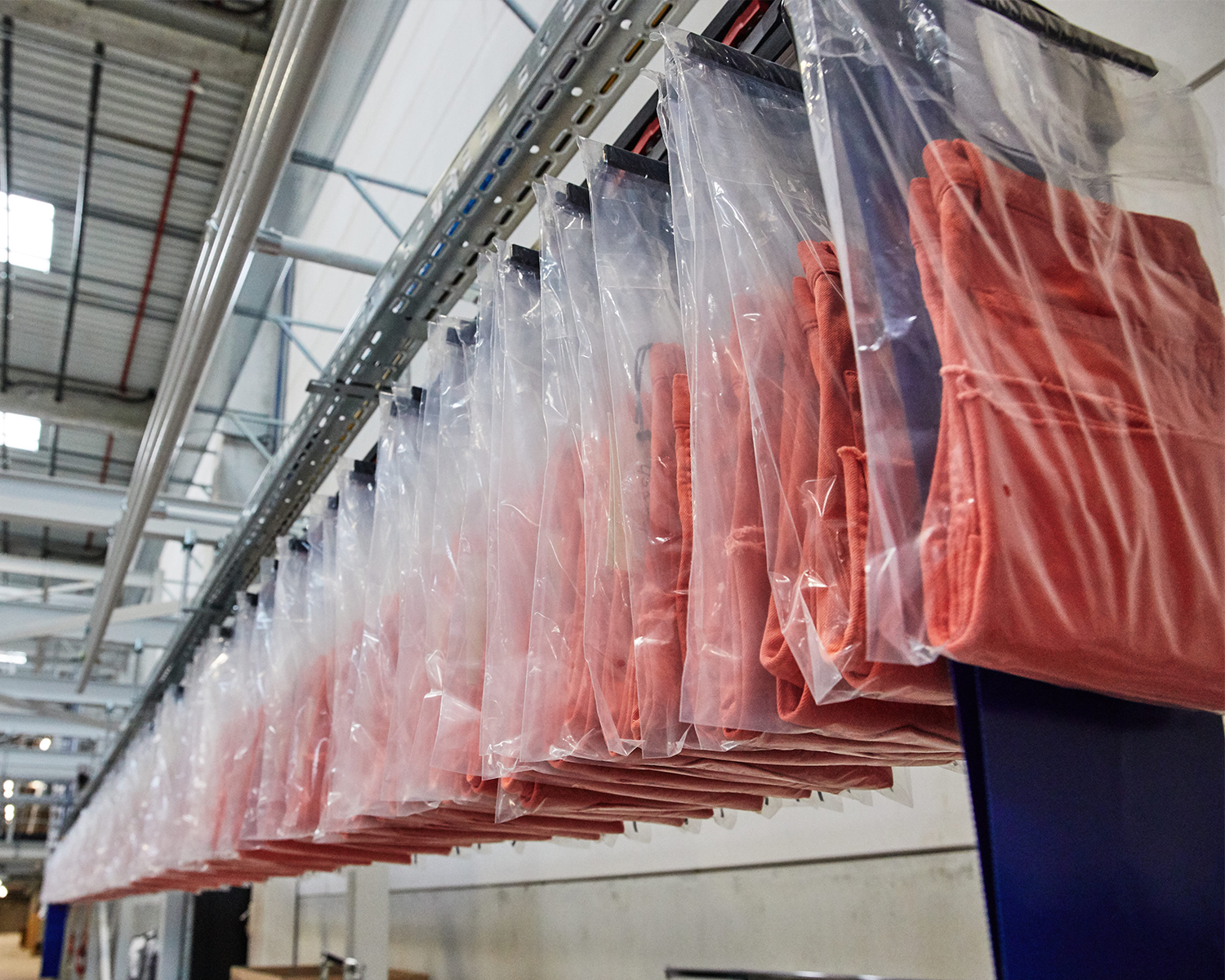
Since 2022, the little pouches designed to protect your ba&sh parts during transport, known as polybags, have been made from the same material, LDPE, which is 100% recycled and recyclable. We have looked into the possibility of “bio-sourced” plastic, considered compostable, but have ruled this out, as its environmental benefits have yet to be proven. What's more, no large-scale composting facilities exist.

Our targets

0%
virgin plastic across all our packaging, by 2030.

100%
of packaging made exclusively from recycled paper and cardboard, using wood pulp from sustainably managed forests, by 2028.
Frequently asked questions
Raw materials account for 58% of our carbon footprint. Hence, they constitute an essential lever for reducing our impact. To reduce our greenhouse gas emissions and help preserve biodiversity, we select our materials with care, always choosing the best possible option, such as organic or recycled fibres, or certified materials that guarantee animal welfare and sustainable pasture management, based on labels with the highest standards.
And when the best option is not possible - due to lack of supply, for instance - we select the next best alternative.
To find out more, visit the “Materials” section of our website.
Since 2019, ba&sh has assessed its carbon footprint yearly, using the GHG Protocol methodology across all its direct and indirect activities (scopes 1, 2 and 3).
In 2025, ba&sh's activities generated 70,212 tonnes of CO₂e.
After a 15% decrease between 2022 and 2023, then a 5% decrease between 2023 and 2024, our carbon footprint increased by 8% in 2025 (+5,398 tCO₂e), while remaining 4% below its 2021 level.
This increase is explained by three factors, which we fully own in the interest of transparency: the strengthening of our calculation methodology with more demanding emission factors, the integration of a larger share of animal materials (wool, leather, cashmere) which are more emitting, and the growth of our business, which increased our manufacturing and transport volumes.
These results reinforce our determination to accelerate on our action levers: certified materials, reducing air transport, low-carbon energy, and relocation to nearby import markets. To find out more, visit the "Footprint" section of our website.
ba&sh has established a strict social compliance policy, which is appended to the General Terms and Conditions signed by all suppliers. A valid social audit is mandatory for all its direct suppliers; ba&sh recognises only the most demanding and internationally recognised audit standards: BSCI, SMETA, WCA, ICS. Suppliers are assessed on: workers' working conditions, remuneration, decent working hours, health and safety, rights to freedom of association and collective bargaining, environmental protection... Following a social audit, ba&sh works together with suppliers to implement corrective action plans to address any identified non-compliance. ba&sh has been a member of Amfori BSCI since 2021 and has been conducting environmental audits in its denim washing facilities since 2023.
In 2025, 96% of our tier 1 production sites are audited.
Our goal is to have 100% of tier 1 sites audited, and 30% of tier 2 sites, by 2028.
In 2025, 51% of our production comes from nearby import regions (Europe, North Africa, Turkey) and 49% from long-haul import regions (China, India).
We have no intention of stopping here: by 2028, we aim to have 60% of our production sourced from nearby import regions and 40% from long-haul import regions.
To find out more, visit the "Partners" section of our website or read our sustainability report.
B Corp™ certification assesses a company's overall impact in seven key areas: Mission & Stakeholder Governance, Climate Action, Human Rights, Fair Labor, Justice, Equity, Diversity & Inclusion, Environmental Management & Circularity, and Public Affairs & Collective Action. To assess compliance with the demanding criteria set by B Corp™, companies must complete a questionnaire and then provide documents to verify each answer.
Being B Corp™ certified means obtaining international recognition that attests that we meet high social and environmental standards.
Our animal welfare policy has been updated in line with the recommendations of animal welfare nonprofit Four Paws, who has also reviewed our policy. This document is appended to our General Terms and Conditions, which are signed by all suppliers.
In concrete terms:
In 2025, 77% of our animal materials are certified. The RWS and RMS labels guarantee that fibres come from a certified supply chain ensuring animal welfare and sustainable pasture management. The GRS label guarantees the recycled origin of the fibres.
- ba&sh bans fur as a member of the Fur-Free Retailer Program.
- ba&sh prohibits the use of exotic leather (crocodile, snake, etc.).
- ba&sh prohibits the use of down and feathers (a commitment formalised by joining the Feather Free Pledge).
- ba&sh prohibits the use of angora.
- ba&sh prohibits the practice of mulesing as a signatory to the Brand Letter of Intent initiated by the NGO Four Paws.
- ba&sh prioritizes recycled cashmere. When virgin, it is GCS certified.
ba&sh is also rated Green in Four Paws' Wear It Kind ranking, among the top 17 brands assessed (less than 7% of the 256 brands).
To find out more, visit the "Materials" section of our website or read our sustainability report.
